Dunbar Shipwreck
THE 165TH COMMEMORATION OF THE DUNBAR SHIPWRECK AT THE GAP
August 20, 2022 was the 165th anniversary of the Dunbar which was wrecked off Sydney’s South Head in 1857. Roger Bayliss of the Watsons Bay Association organized a gathering at The Gap near the Dunbar anchor to commemorate this tragic occasion and remember all those 121 lives lost on that stormy, fateful night. Susan Wynne, the Mayor of Woollahra along with James Hanson, a descendant of the only survivor, James Johnson, laid flowers. Speeches were made by Roger Bayliss, Larry Writer, author of The Shipwreck, and a special joint blessing was performed by Monsignor Tony Doherty and Paula Towers remembering those who lost their lives from all faiths. A group of local residents and others, including Peter Poland of Woollahra History & Heritage Society Inc, were in attendance. The Watsons Bay Hotel generously provided hospitality to all after the ceremony.
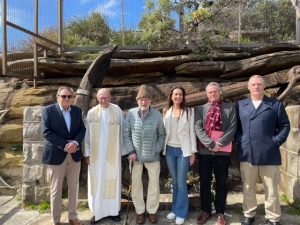
L-R: Roger Bayliss, Watsons Bay Association, Monsignor Tony Doherty, Peter Poland, Woollahra History & Heritage Association Inc, Mayor of Woollahra Susan Wynne, Larry Writer, author & James Hanson, descendant of James Johnson.
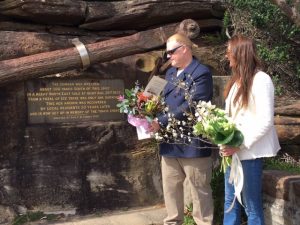
L-R: James Hanson and Mayor of Woollahra, Susan Wynne laying flowers.
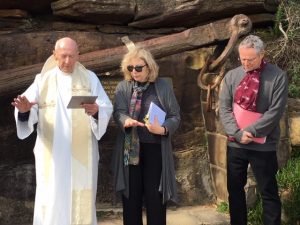
L-R: Monsignor Tony Doherty and Paula Towers performing a joint blessing and Larry Writer, author.
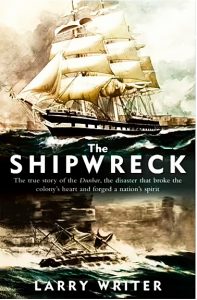
The Shipwreck: The True Story of the Dunbar; the Disaster that Broke the Colony’s Heart and Forged a Nation’s Spirit, written by Larry Writer and published by Allen & Unwin, 2022. Here is a synopsis of Larry’s book.
“Everyone has heard of the Dunbar shipwreck, and we’ve all seen the great sailing clipper’s anchor at the Dunbar memorial at The Gap at Watsons Bay. Now, in his new book, The Shipwreck: The True Story of the Dunbar, the Disaster that Broke the Colony’s Heart and Forged a Nation’s Spirit, Sydney author Larry Writer dives deep into the tragedy when, in a ferocious storm at midnight on August 20, 1857, Dunbar collided with the cliffs of outer South Head and 121 of the 122 passengers and crew perished. Writer reveals why the ship crashed, who was to blame, and follows the personal stories of its crew, the passengers and the sole survivor, James Johnson, whose miracle rescue defied belief. The effect on the fledgling colony is movingly chronicled. More than a third of Sydney’s 57,000 population lined the streets as the funeral procession of the victims made its sad way from Circular Quay to Camperdown Cemetery. The aftermath to the shipwreck saw enormous changes to Port Jackson navigation and maritime safety, including upgrading of the marine pilot service, the construction of a telegraph line from South Head to the city, and the building of Hornby lighthouse that still stands overlooking the Heads.
The news that the mighty Dunbar had been wrecked was a stab to the heart of Sydney town. Never had there been a calamity of this magnitude in the colony. The destruction of the clipper traumatized all of Australia because there had never been the loss of such a fine, seemingly unsinkable ship at the very entrance to Port Jackson. And, adding to the anguish, among the dead were prominent people whose success and hard work had transformed the desperate settlement of Arthur Phillip into a thriving city. The loss of Dunbar was a reminder of how gossamer-fragile was people’s hold on life in a fledgling nation so far across the sea from their family, friends and heritage.
Just when New South Wales and its citizens were prospering thanks to gold, wheat, wool and manufacturing and commerce, Dunbar’s demise rammed home that safe passenger and merchant seafaring to and from the Old Country could never be taken for granted. No matter how fast and strong the vessel, or how skilled her master and crew, those who went to sea in sailing ships in the 19th century were always at the mercy of fate and the elements.”